On this page
The pitch for AI agents is extremely attractive. Give the agent a goal. It researches.
It updates systems. It follows up. It keeps working.
You save time. Excellent. Then companies started using them.

AI agents are moving into real workflows fast, but workers are discovering a new job: supervising the agents. The important metric is not how much work an agent produces. It is how much useful work remains after monitoring, correction and cleanup.
Lynka Team · October 12, 2026 · 13 min read · AI
Follow Lynka on Google
Get new articles in your preferred sources.
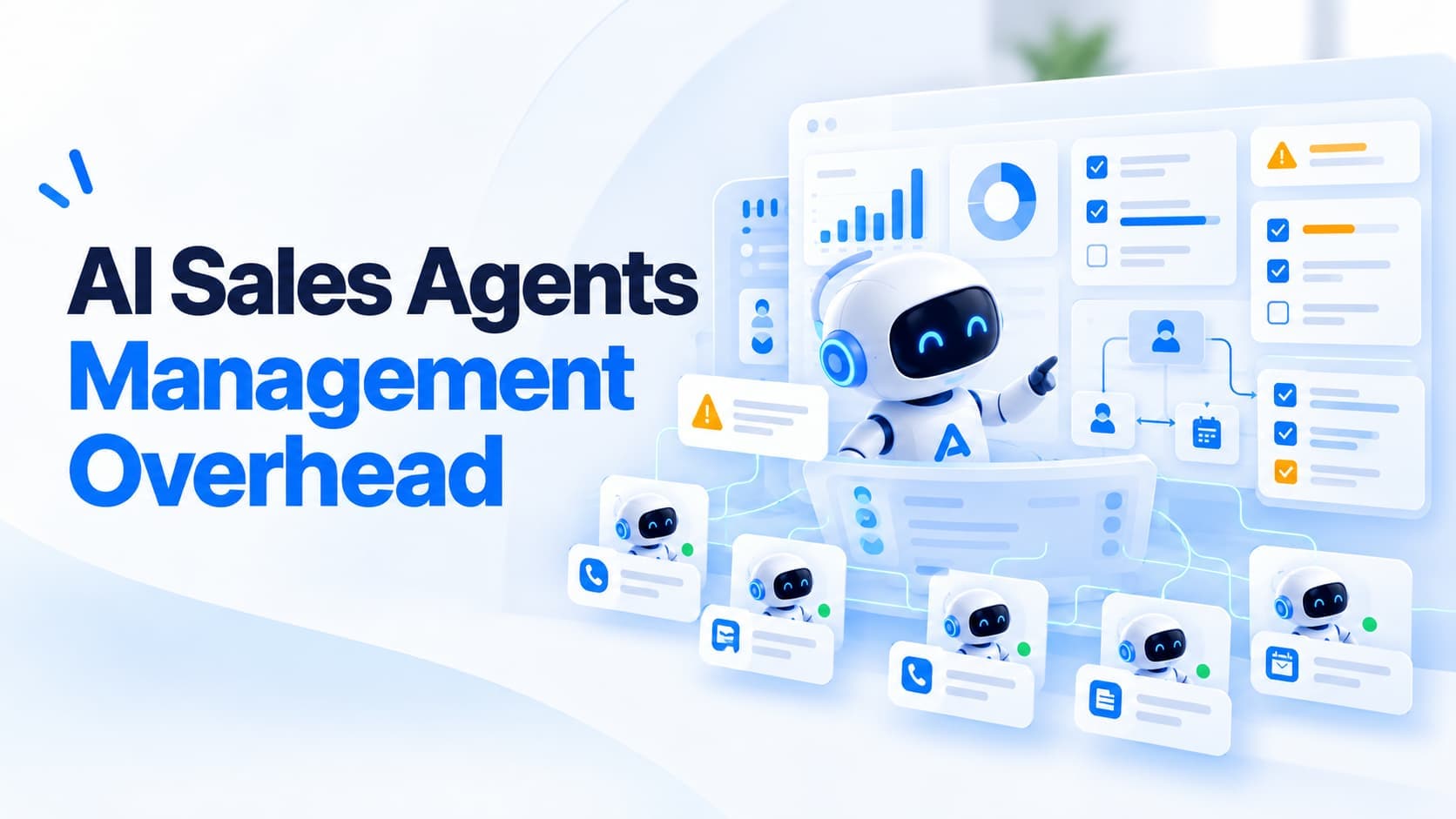
The pitch for AI agents is extremely attractive. Give the agent a goal. It researches.
It updates systems. It follows up. It keeps working.
You save time. Excellent. Then companies started using them.
And a new job appeared:
managing the agents.
Recent workplace reporting is beginning to surface a less exciting side of agent adoption: employees spending time checking outputs, correcting drift, switching between automated workflows and investigating what the agent did. Business Insider reported in October 2026 on teams discovering that supervising agents can feel surprisingly similar to supervising people, except the agent can repeat the same mistake at machine speed. The report is here.
This does not mean AI agents are useless. It means the productivity calculation has been too simple. The real equation is not:
work automated = time saved
It is:
work automated - supervision - corrections - setup - failures = time actually saved
That last number is the one businesses should care about.
This is not theoretical anymore. Boston Consulting Group's 2026 global AI-at-work research found that 30% of respondents said AI agents were already integrated into workflows, up from 13% the year before. Another 50% said their workplaces had run agent experiments or pilots.
At the same time, half of respondents said their organizations lacked clear governance for managing teams that include humans and AI. BCG's 2026 research is here. That is a fascinating combination:
agent adoption is accelerating
while
the management system is still being invented.
Which is why the current phase feels messy. We are hiring the robots before writing the employee handbook.
Sales contains a huge amount of repetitive work. Research accounts. Find contacts.
Summarize companies. Classify leads. Enrich records.
Draft emails. Schedule follow-ups. Update CRM.
Prepare meeting notes. Check stale opportunities. Route inbound leads.
None of those tasks require someone to have an existential breakthrough every morning. They are bounded. Repeated.
Often rules-based. Perfect agent territory. That is why AI sales automation is growing so quickly.
But there is a trap. Sales also contains judgment. Timing.
Tone. Negotiation. Context.
Trust. And weird exceptions. Those are exactly the places where automation starts needing supervision.
The phrase AI sales agent is too broad. A good agent should have a job you can explain in one sentence. For example:
Research every new inbound company and summarize whether it fits our ICP.
Good.
Review open deals every morning and flag any with no activity for 14 days.
Good.
Draft first responses for new leads using the information they submitted.
Good.
Keep the CRM clean by identifying likely duplicate contacts for review.
Good. Now compare:
Help with sales.
What does that mean? Prospecting? Closing?
Pricing? Forecasting? Emailing?
Qualification? Research? Negotiation?
The broader the job, the harder it becomes to evaluate the agent. If you cannot explain the role clearly, the agent cannot perform it clearly.
An agent can start by doing exactly what you intended. Then context changes. Prompts accumulate.
Tools change. Data quality changes. A workflow gets updated.
Someone adds another instruction. Another person adds an exception. Three months later the agent is behaving differently from the version everyone originally approved.
Humans do this too. We call it "the process changed." With AI, it can be harder to notice because the output still looks plausible. The agent does not announce:
Good morning. I have gradually become 11% worse at understanding your lead qualification policy.
It just makes more questionable decisions. That is why agent performance needs ongoing evaluation. Not one demo.
Not one successful week. Ongoing.
Let's define the problem. An AI agent may create value by removing work. But it also creates new work:
Someone writes instructions. Connects tools. Defines permissions.
Creates test cases.
Someone checks whether it is behaving.
Someone fixes errors.
Someone handles exceptions.
Prompts change. APIs change. Models change.
Business rules change.
Someone decides what the agent is allowed to do. That is the management tax. If the tax is small, agents are amazing.
If the tax is huge, you have simply invented a strange employee who never sleeps and still needs supervision.
This sounds obvious. Companies still do it. Bad metric:
The agent sent 8,000 emails.
Congratulations? Better:
The agent created 120 qualified conversations.
Better:
The agent created 18 opportunities worth $240,000.
Better:
The agent created those opportunities while requiring 4 hours of human review.
Now we can evaluate something. Agent activity is not value. The same rule applies to:
Ask what happened after the activity.
Imagine an agent enriching 5,000 contacts. Fantastic. Now imagine:
400 companies mapped incorrectly. 250 job titles outdated. 80 duplicates created.
35 important customers overwritten. The dashboard still says:
5,000 records enriched
The cleanup happens quietly. This is why agent measurement needs error rates. For a sales agent, track:
The metric is not:
How much did the agent do?
It is:
How much correct work survived?
Suppose an agent costs $500 per month. Cheap. It saves 40 employee hours.
Excellent. But employees spend:
Net time saved:
14 hours. Still useful. But very different.
Now suppose the review burden rises to 35 hours. You have an agent that "automates 40 hours of work" and saves five. That is why vendor ROI slides can be misleading.
They count the work transferred to AI. They do not always count the work created around the AI.
There is a reason simple automation survives. A rule like:
If lead source is website and country is Ghana, assign to Anthony.
is boring. It is also predictable. An AI agent becomes useful when the task cannot be described with a simple rule.
For example:
Research this company and decide whether it looks like a strong fit based on our ICP.
That requires judgment. Use AI where judgment adds value. Do not replace every deterministic rule with a model because models are fashionable.
The best system will often be:
rules for certainty
AI for ambiguity
humans for consequence
That architecture is less exciting than "autonomous AI workforce." It is also more likely to work.
Several sales jobs are strong candidates.
Summarize:
Human verifies before important outreach.
Compare the lead against explicit criteria. Flag:
strong fit
weak fit
missing information
Do not force the model to invent missing data.
Find:
Recommend fixes.
Summarize:
Useful and low risk.
Draft. Human reviews. Send.
This still saves time without giving the agent a blank cheque.
Understand free-text enquiries and suggest the correct owner or category. Again, rules can handle obvious cases and AI can handle messy text.
Some tasks deserve more caution.
Agents should not improvise commercial terms.
Same problem.
Do not let the model accidentally promise something your company cannot deliver.
Low-risk early stages may be fine. Marking a deal Won or Lost can have reporting consequences.
A strange automated message to a $20 customer is annoying. A strange automated message to your largest enterprise account becomes a meeting.
Permissions matter. A sales agent should not gain access to information it does not need simply because "it helps with context."
This is one of the most overlooked design decisions. When should the agent stop? For example, an outbound agent might:
Fine. What if the prospect says:
Please stop emailing me.
The stop condition must be deterministic. What if they say:
I'm interested but need legal approval.
Maybe hand off. What if they ask for a discount? Human.
What if they threaten legal action? Definitely human. Autonomy is not just what the agent can do.
It is knowing when the agent should get out of the way.
A useful agent should know:
do this
do not do this
ask a human here
For example:
This is not a limitation. It is product design.
Especially when it makes a judgment. Bad:
Lead score: 82.
Why? Better:
Strong fit because the company has 45 employees, operates in our target industry, is actively hiring sales staff and currently uses a spreadsheet-based process according to the discovery call.
Now the salesperson can inspect the reasoning. Agents that make consequential recommendations should expose evidence. Otherwise "AI score" becomes astrology with an API.
This connects directly to another current agent problem. The agent can only operate on the data available. If the CRM contains:
the agent's work degrades. HubSpot and Salesforce have both been emphasizing data foundations as agent adoption grows. HubSpot's September 2026 UNBOUND session on agentic AI explicitly described scattered and outdated data as a barrier to useful agents. HubSpot's session is here.
So managing the agent is partly managing the information feeding it. That sounds less futuristic. It is more accurate.
This should be the standard. After three months, ask the salesperson:
Is this actually making your day easier?
Not:
Are you using the agent?
Not:
How many actions did it take?
Easier. If the answer is:
I spend every morning fixing what it did overnight.
you have a problem. If the answer is:
It gets the research ready, keeps my CRM clean and surfaces the five people I should call.
you have something. The difference is not model intelligence alone. It is workflow design.
A good sales agent may not feel like a colleague. It may simply make the CRM less annoying. You open the account.
The research is there. The duplicates are flagged. The stale deals are highlighted.
The meeting summary is ready. The next action is suggested. Nothing dramatic happened.
No anthropomorphic avatar said:
Good morning. I have autonomously optimized your revenue workflow.
Thank God. The work is just easier. That is what software is supposed to do.
Start with boring work. Seriously. Good first candidates:
Avoid starting with:
Let the AI run outbound sales completely.
You do not know how the system fails yet. Learn on work where a mistake is easy to notice and inexpensive to fix. Then expand.
Pick one role. Example:
Research every new company lead.
Create 50 historical examples. For each, define what good output looks like. Then test:
Was the company identified correctly?
Did the summary contain what sales needs?
Did it invent anything?
How long did the task take?
How long did checking take?
What did the model/tools cost?
How many had to be redone? Then compare with the human process. Now you have evidence.
Time matters. Attention matters more. An agent that saves 20 minutes but creates five interruptions may not feel useful.
A good agent should reduce:
It should not create:
This is why the best always-on agent may be the one that knows when to remain silent.
Lynka is not pretending that an AI agent should replace the entire sales process. The foundation still matters:
If you eventually put agents on top of those workflows, the agent should make the system easier to operate, not turn it into another thing the salesperson has to babysit. That is the standard worth holding. Explore Lynka Sales See Lynka Lead Generation View pricing
At least not in the way the metaphor suggests. They do not need motivation. They do not get bored.
They do not ask for vacation. But they also do not naturally understand every unwritten rule in your company. They do not build trust the way people do.
They can fail in very unfamiliar ways. And they need systems that tell them:
what is true, what is allowed, what matters, and when to stop. That is management. So yes, AI agents can save enormous amounts of work.
But only after we stop pretending that delegation means zero supervision. The future may contain fewer repetitive tasks. It may also contain a new skill:
knowing how to manage machines that look more autonomous than they really are.
That is not a reason to avoid agents. It is a reason to measure them properly.
An AI sales agent is software that uses AI to perform or assist with sales work such as account research, qualification, routing, follow-up drafting, CRM updates or other repeatable tasks.
They can, but the correct measure is net time saved after setup, monitoring, corrections and exception handling.
Agents can encounter bad data, ambiguous instructions, changing business rules, tool failures and situations outside their intended scope. Supervision and escalation rules help contain those failures.
Good early use cases include company research, meeting preparation, enrichment, duplicate detection, stale-deal detection, lead classification and drafting follow-ups.
High-risk tasks such as approving discounts, making contractual commitments, changing invoice information or making sensitive account decisions should generally have stronger human controls.
Measure success rate, correction rate, escalation rate, human review time, total cost, downstream outcomes and net time saved rather than simply counting agent actions.
Agents can automate parts of the sales workflow, especially repetitive research and administrative work. Relationship building, negotiation, judgment and high-stakes decisions still benefit heavily from human involvement.
Keep the next step connected
Bring prospecting, follow-up, sales and the work after the sale into one connected workspace.
Keep reading
Companies are rushing to add AI agents to sales and CRM workflows. The awkward part is that an agent can only act on the data it can trust. Duplicate contacts, stale deal stages, and broken ownership do not disappear when AI arrives. They scale.
OpenAI Dots are always-on AI agents powered by GPT-6 Astra that can keep working between conversations, use a cloud computer, connect to apps and proactively bring work back to you. That sounds useful. It also creates some very interesting problems.
Claude Sonnet 5.5 costs half as much as Opus 5.5, runs faster, shares its 1M-token context window, and gets surprisingly close on professional work. For many businesses, Anthropic's second-best model may now be the smarter model to buy.